
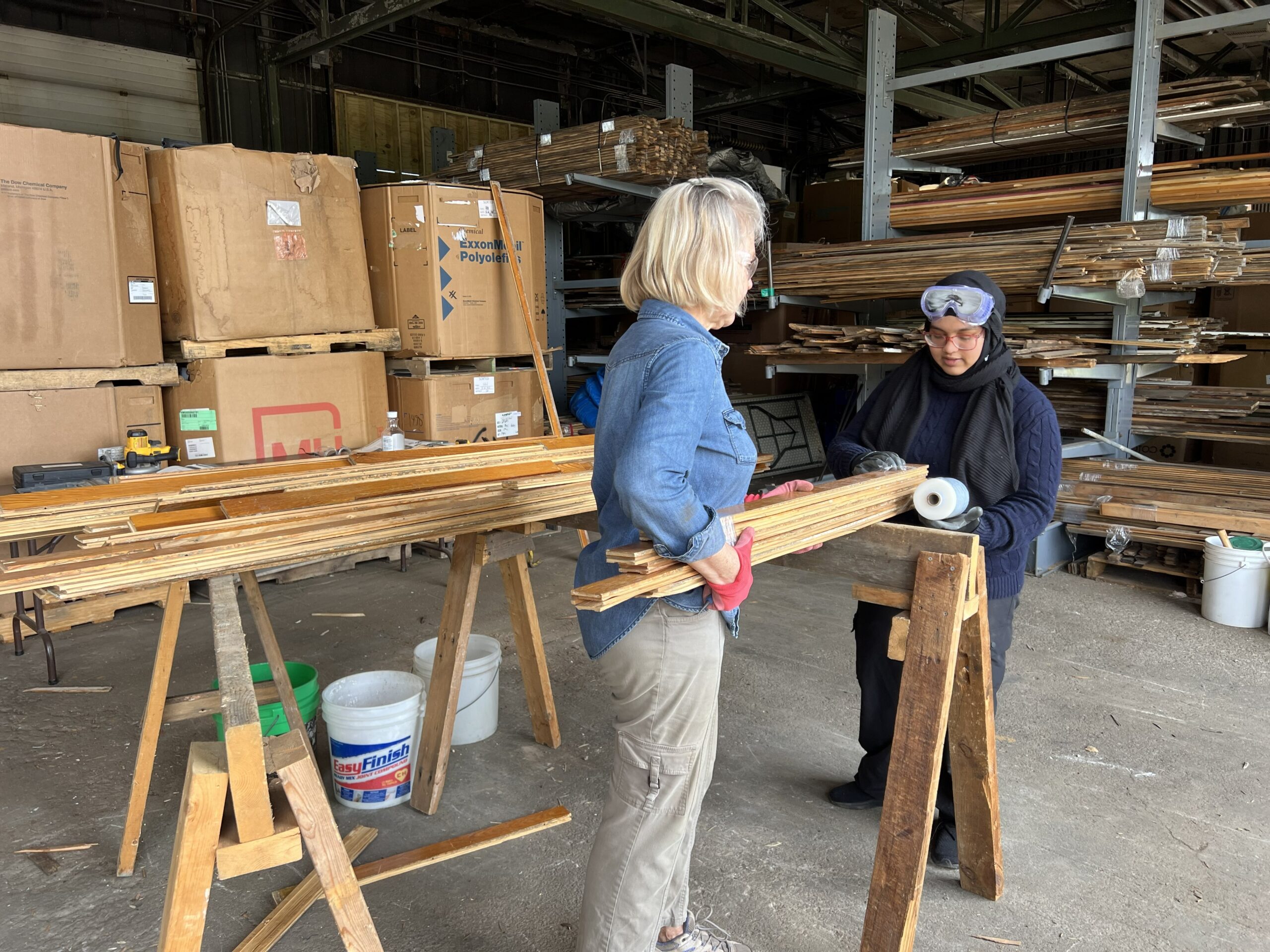
Galiba Anjum ’26 brings something rare to the team at Cornell’s Susan Christopherson Center for Community Planning. As one of the only students with a technical background, the computer science and information science double major has applied this skill set to help transform how the center — a statewide initiative advancing equitable and resilient development — shares knowledge and connects communities far beyond Ithaca.
Anjum
Since joining as a program assistant through the Community Work-Study Program in 2021, Anjum has taken the lead on projects that expanded the center’s digital reach and impact. She upgraded and expanded its website, developed a statewide service directory for circular construction advocates, and supported a related non-profit, Finger Lakes ReUse, in launching a step-by-step online guide for communities starting reuse centers. She also helps produce the center’s Circularity, Reuse and Zero Waste Development (CR0WD) Conversations webinars, which often attract more than 100 attendees, by editing recordings to share with a broader audience.
“With a small team, we rely on our student staff to help carry forward key projects,” said Gretchen Worth, M.P.S. ’20, M.A. ’20, the center’s founding project manager. “Galiba’s role has been essential not just for our digital strategy, but in setting a standard for collaboration, curiosity and impact. She’s a fantastic writer, designer and technologist.”
The role also became a catalyst for Anjum’s own academic discovery as she found herself immersed in fields she hadn’t expected to explore, including climate resilience, community engagement, urban planning and Geographic Information Systems (GIS). “I’ve discovered new interests I never would’ve found in my major alone,” she said. “I’m now taking GIS courses and working with the USDA in data science because of the exposure I got through the center.”
Her advice to other students considering CWSP? “Apply to something that excites you and don’t be afraid to ask about shaping the role to fit your interests. This kind of opportunity doesn’t come around often.”
This story is part of a series highlighting Cornell’s Community-Work Study Program.