
Cornell students are gaining new opportunities to extend classroom learning beyond campus through the latest round of Engaged Opportunity Grants from the Einhorn Center for Community Engagement.
The five funded projects bring together faculty, staff and community organizations around issues ranging from biodiversity conservation and disaster response to film history, comedy and early childhood development, giving students hands-on experience while contributing to ongoing work in the broader community.
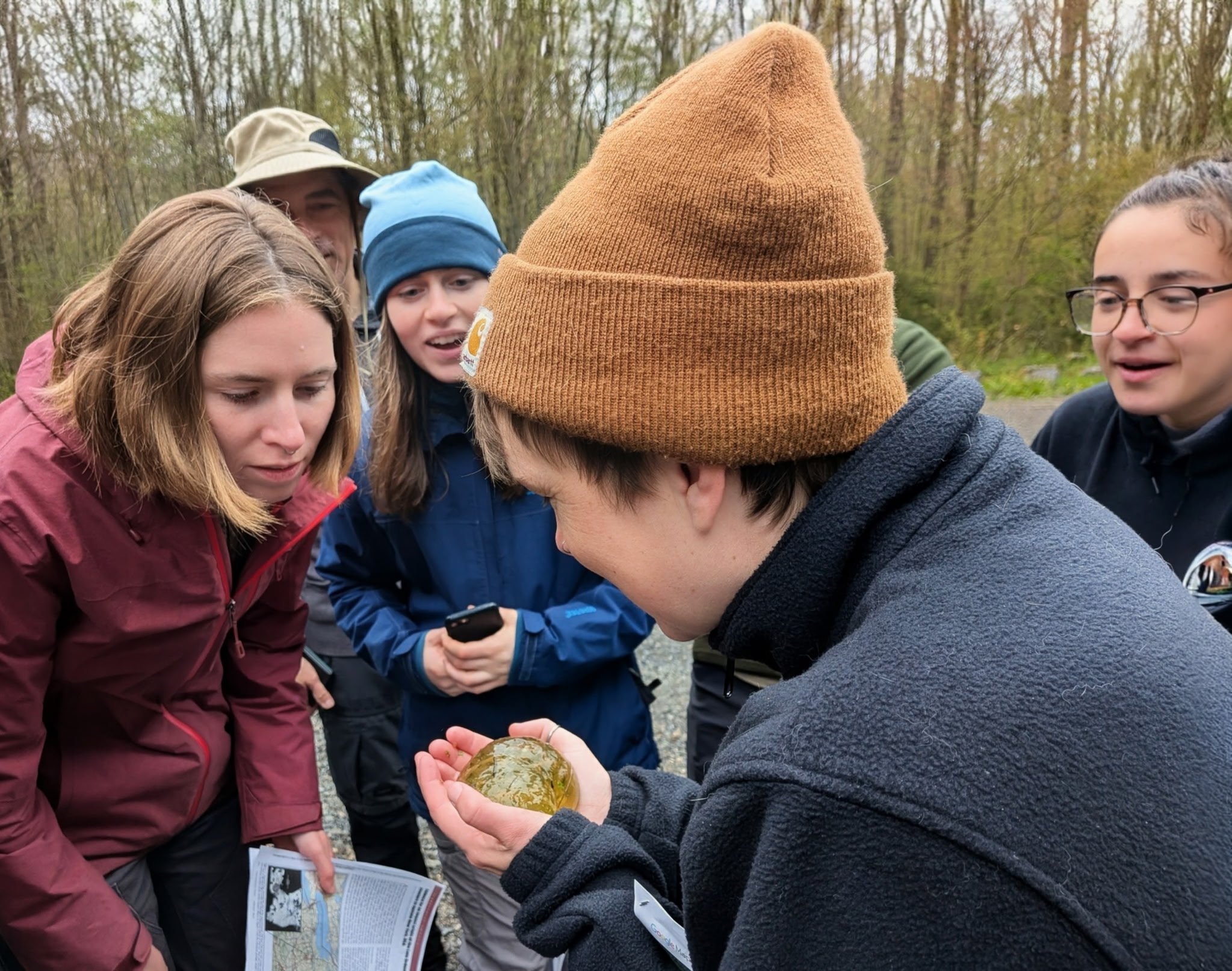
A lecture and lab course in herpetology (BIOEE 4700/1) led by assistant professor of ecology and evolutionary biology Molly Womack (College of Arts and Sciences) will partner with Tompkins County Amphibian Migration Patrol to study and protect migrating frogs and salamanders in Tompkins County. Each spring, thousands of amphibians cross dangerous roads as they travel to breeding wetlands. Students will analyze local migration data to better understand amphibian biodiversity and factors affecting migration survival while helping guide science-based conservation efforts. The project will also connect students with work on a planned amphibian underpass designed to help animals safely cross a local roadway.
Several of the projects also build partnerships with local museums, theaters and cultural organizations, creating opportunities for students to contribute to educational and creative initiatives for the Ithaca community.
Nurturing Early Speech Together (NEST) — a collaboration between psychology professor Michael Goldstein (College of Arts and Sciences), the Sciencenter and Tompkins Community Action — will support early communicative development among local families. Drawing on research into early language exposure and parental responsiveness to infants’ vocalizations, the program combines parenting workshops for Early Head Start families with interactive exhibits at the Sciencenter. Undergraduate students in Goldstein’s advanced developmental seminar (PSYCH 4770) will help design and refine exhibit prototypes, while participants provide feedback. Researchers will also conduct follow-up studies tracking children’s communicative and cognitive development after the workshops.
Ithaca’s rich cinematic history is at the center of Cinematic Cities (SPAN/COML 3485), taught by associate professor of Spanish and comparative literature Patricia Keller and senior lecturer of Spanish language and literature Cecilia Lawless, both in the Department of Romance Studies (College of Arts and Sciences). Once known as the “biggest little movie city,” Ithaca was an important center of early American filmmaking, surrounded by silent film studios and film manufacturing across the Finger Lakes. Partnering with Cinemapolis, the Wharton Studio Museum, the State Theatre and the History Center of Tompkins County, students will help curate public events and design a digital map tracing Ithaca’s cinematic footprint from the silent film era to present-day moviegoing culture across central upstate New York.
A new first-year writing seminar taught by Emily Foster, lecturer in the Department of Literatures in English (College of Arts and Sciences), will connect students with Ithaca’s theater community in a project with the Hangar Theatre and its artistic director, Shirley Serotsky. Students will analyze literary humor while developing their own comedic writing through performance labs at the theater and direct engagement with local artists and theater professionals. Throughout the semester, they will attend productions, interview staff and volunteer with show setup and breakdown. The course will culminate in a public reading of students’ original comedic pieces on the Hangar Theatre’s mainstage.
Atlantic Hope, finally, will give students from across the university the opportunity to practice humanitarian aid and disaster response through a large-scale simulation. Drs. Danielle Eiseman and Lorraine Francis, both in the Department of Public and Ecosystem Health in the College of Veterinary Medicine, have partnered with the Consortium for Humanitarian Services and Education (CHSE) to bring this unique hands-on learning opportunity to Cornell. The simulation allows students and their peers at other institutions to practice key disaster-response skills, including negotiation and emergency management, while working with volunteer staff from federal, state and local agencies who provide feedback and instruction.
Learn more about the five funded projects:
- Building the NEST
- Mapping Place through Cinema
- Sustaining Local Amphibian Diversity
- Reading, Writing and Performing Comedy
- Atlantic Hope @ Cornell
Engaged Opportunity Grants provide support for planning and sustaining a wide range of community-engaged learning activities for undergraduates. The Einhorn Center accepts grant proposals from faculty, staff, and select community partners every spring and fall.