


“Important Conversations Happen in the Kitchen.” For Ithaca’s Kitchen Theatre Company, that slogan speaks to the power of bold and thought-provoking performances to spark dialogue. For Katie Kim ’28, it also describes the role the Kitchen has played in her own education and career path through the Community Work-Study Program (CWSP) which was made possible by the Cornell Tradition fellowship.
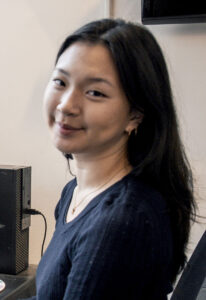
Kim in Kitchen Theater office
Coming from a performing arts high school, the double major in economics and performing and media arts was eager for opportunities to stay connected to the theater — and found a home with CWSP and the Kitchen.
“I’d recommend this experience to any student,” Kim said. “You are working with people who are truly passionate about what they do and who have built their lives around the theatre in this small town. You are helping serve the larger Ithaca community in a meaningful way.”
With a small staff and limited budget, the Kitchen depends on student support to keep things running smoothly, says the theatre’s artistic director, Emily Jackson. “We wouldn’t be able to afford this kind of help without CWSP.” The program also frees her to focus more deeply on the artistic side of production while bringing fresh energy into the space. “In Ithaca, people all think about community differently, and each student brings a different perspective that marries groups in a way that is important to us,” she said.
For Kim, the work has offered a valuable window into the professional theatre world. From welcoming patrons at the front desk to managing ticketing systems, she’s gained both technical skills and customer service experience. She was also encouraged to pursue projects tied to her own interests, including finance and administration — expertise that will be key to a career managing finances for a cultural institution or nonprofit theater. “This is a small version of everything that I want to do in the future,” Kim said. “It really reaffirmed that this is what I want and that I want to be the one calling the shots.”
Since Kim’s start at the Kitchen in September of 2024, she has come full circle and is now stepping onto the stage for her first acting role. Whether on stage or behind the scenes, this theater has become more than a job for Kim, nurturing her professional aspirations while keeping her connected to the art form that first inspired them.
This story is part of a series highlighting Cornell’s Community-Work Study Program.