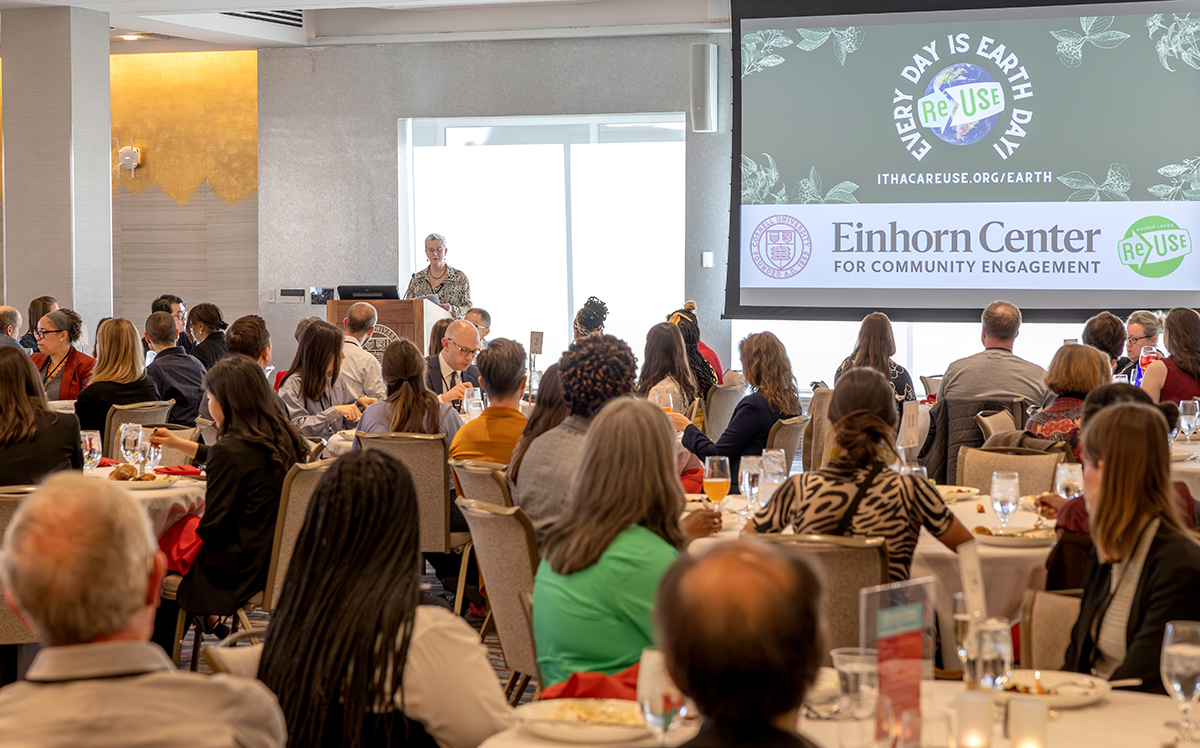

Fourteen members of Cornell’s faculty and staff are being recognized this year with Community-Engaged Practice and Innovation Awards from the David M. Einhorn Center for Community Engagement. With one recipient representing each of the university’s colleges and schools, along with an honoree from Student and Campus Life for the first time, the awards highlight individuals who have developed community-engaged learning, leadership or research initiatives that create meaningful curricular and co-curricular opportunities for students.
“This year’s Community-Engaged Practice and Innovation Award recipients reflect the breadth and depth of community-engaged work taking place across Cornell,” said Basil Safi, executive director of the Einhorn Center. “Faculty are partnering with communities locally and globally — from Ithaca and Tompkins County to New York City, India and beyond — to address challenges in areas such as health, agriculture, education, entrepreneurship and environmental data. Across all this work, students are deeply involved as learners, collaborators and emerging leaders, applying their academic knowledge in meaningful partnership with communities.”
Recipients of the 2026 Community-Engaged Practice and Innovation Awards are:
College of Agriculture and Life Sciences: Marvin Pritts, professor, horticulture and global development, has created numerous opportunities for students to engage with local and international communities to tackle applied agricultural challenges. Horticulture 4520/6520: Berry Crop Production and Management is an example of a popular and academically rigorous course, in which student teams collaborate with small-scale farmers who are new to berry production.
College of Architecture, Art and Planning: Keith Obadike, professor, art, uses his role as director of undergraduate studies to foster a culture of community-engaged practices across the AAP curriculum. As an artist, working with his partner Mendi Obadike, he sets examples of engagement, such as their 2025 collaboration, GuideStar, with a Black-owned community art center in Seattle to beam light and sound from the Space Needle.
College of Arts and Sciences: Alexander Livingston, associate professor, government, has led efforts to launch a Knowledge for Freedom program at Cornell with support from the Teagle Foundation. The program aims to open pathways to education for local underserved high school students who will visit campus to study foundational texts of political thought and make connections with Arts and Sciences undergraduates as facilitators and mentors through the Humanities Scholars Program. Currently working with partner schools through STEP and Upward Bound, the Einhorn Center’s pre-college programs, the initiative plans to expand its relationships with additional regional schools.
College of Human Ecology: Adam Hoffman, assistant professor, psychology, collaborates in sustained partnership with LGBTQ+ youth-serving organizations, The Ali Forney Center in New York City and The Q Center in Syracuse. He and his partners are conducting a three-year longitudinal study with more than 250 LGBTQ+ youth. One recent outcome of this work is Our People, Our Stories: Celebrating LGBTQ+ Chosen Family, an art exhibit co-created with community partners that centers artistic expressions of youth participants on the topic of chosen family, a central theme of the study.
College of Veterinary Medicine: Dr. Erin Henry is an essential contributor to the extensive community engagement work conducted by the Maddie’sⓇ Shelter and Community Medicine Program. She has led Spay Day since 2019, mentoring student directors through organizing a student‑run spay‑neuter event that delivers essential care for cats from low‑income families while providing hands-on training for veterinary students. In 2024, she was instrumental in launching Trap‑Neuter‑Tompkins Initiative (TNT), a targeted trap-neuter-return initiative in partnership with the SPCA of Tompkins County, which has shown measurable reductions in free‑roaming cat populations and shelter intakes while expanding student skill‑building opportunities in just two summers.
Cornell Bowers Computing and Information Science: Sarah Dean, assistant professor, computer science, works with the weather technology company WindBorne to engage high school students interested in STEM. Through a summer program, participants learned about AI planning algorithms and then launched two weather balloons to collect atmospheric data used in weather prediction, gaining an in-depth learning experience with research in a college environment.
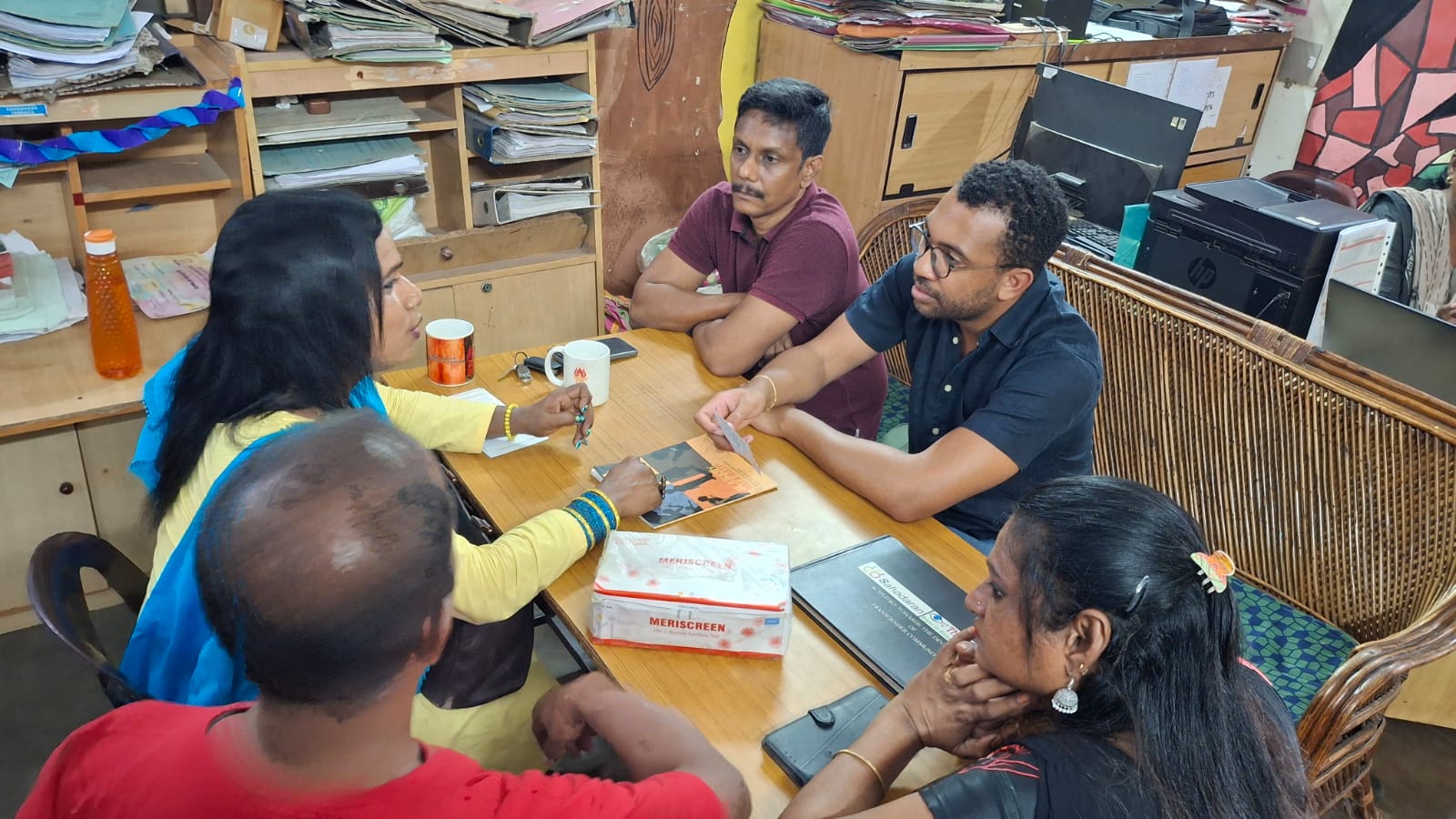
Cornell Brooks School of Public Policy: William Lodge II, assistant professor, conducts community-engaged research focused on HIV, aging and LGBTQ+ health equity in India. He partners with community-serving organizations, including Queerbeat and the Centre for Sexual and Health Research and Policy (C-SHaRP), to translate research into practice. He teaches PUBPOL 2050: Critical Perspectives on Global Health and Policy, which invites students to examine power, ethics and governance in global health. He recently helped create a new course in partnership with the anthropology department and the Keystone Foundation, offering students the opportunity to collaborate with community health workers and practitioners to shape mental health policy in Kotagiri, India.
Cornell Duffield College of Engineering: Lauren Stulgis, Swanson Director of Student Project Teams, has incorporated key elements of community-engaged learning in the design and implementation of an academic framework for student project teams. Serving more than 1,800 students annually across Cornell’s colleges, this framework integrates hands-on project work with structured reflection, interdisciplinary collaboration and leadership development. This work strengthens students’ technical and professional growth while advancing Duffield Engineering’s commitment to meaningful, community-engaged education.
Cornell Law School: Celia Bigoness, clinical professor of law, is the founding director of the Entrepreneurship Law Clinic, in which students represent regional startups that need assistance setting up the legal foundation of their business. The clinic provides pro bono legal services to dozens of entrepreneurs and small businesses every year, and it provides hands-on training to Cornell Law students working under faculty supervision. This work has recently been expanded through a Cornell Tech-based branch of the clinic as part of the Blassberg-Rice Center for Entrepreneurship Law, where Bigoness also serves as founding director.
Cornell SC Johnson College of Business: Carla Ingrando, visiting lecturer and major gifts officer, created NBA 5035: Philanthropic Leadership. In this course, students engage with nonprofit leaders in Tompkins County to gain hands-on experience in nonprofit governance, philanthropic strategy, ethical decision-making and ultimately award approximately $50,000 annually to local organizations.The class is possible because of our collaboration with The Philanthropy Lab, The Triad Foundation, the Community Foundation of Tompkins County and many others. A recent cohort raised an additional $10,000 through crowdfunding to distribute to community partners.
Cornell Tech: Nikhil Garg, assistant professor, ORIE, uses his research to advance artificial intelligence and computational systems in the public interest while engaging students at all levels as core contributors. In one recent, multi-year collaboration, he worked with New York City public schools to increase application rates of disadvantaged middle school students to high-performing schools. In another, his team built an algorithmic tool to equitably and efficiently understanding reporting behavior and agency responses for the New York City Department of Parks and Recreation.
School of Industrial and Labor Relations: Brigid Beachler, director, engaged and experiential learning programs, is building on 25 years of designing credit internships for students with community partners to create and support community-engaged programs in ILR. She stewarded the launch of High Road NYC, modeled after the successful Buffalo High Road, as well as a similar program in Ithaca. She is also developing a continuity plan for ILR’s Global Service-Learning programs and has advocated for community-engaged learning to be part of required coursework.
Student and Campus Life: Abigail Dubovi, director, strategic planning and analysis, Cornell Health, led the design and implementation of an evaluation plan for Cornell’s Health Promoting Campus initiative. Through data collection and analysis, she identified belonging as a key factor in student well-being, informing campus-wide decision-making and interventions. Her work on the relationship between community-engaged learning and well-being represents a novel contribution to the field and a model she is now sharing with institutions across the country through publications and presentations.
Weill Cornell Medicine: Monika Safford, director, Cornell Center for Health Equity, leads the Promotora Empowerment and Education Program in collaboration with the Bea Fuller Rodgers school in the Washington Heights neighborhood of New York City. Through the program, peer educators provide training for parents on healthy eating and other factors related to cardiovascular health. Associated health screenings have helped identify many participants with previously unrecognized hypertension or prehypertension, obesity and diabetes or prediabetes. Students build foundational skills in community engagement and behavior change.