


Happy sheep trotting toward a fresh pasture inspired fiber science major Miriam Lourie’s wool sock design: a creamy white stripe across a textured green knit that puckered like a gently rolling field.
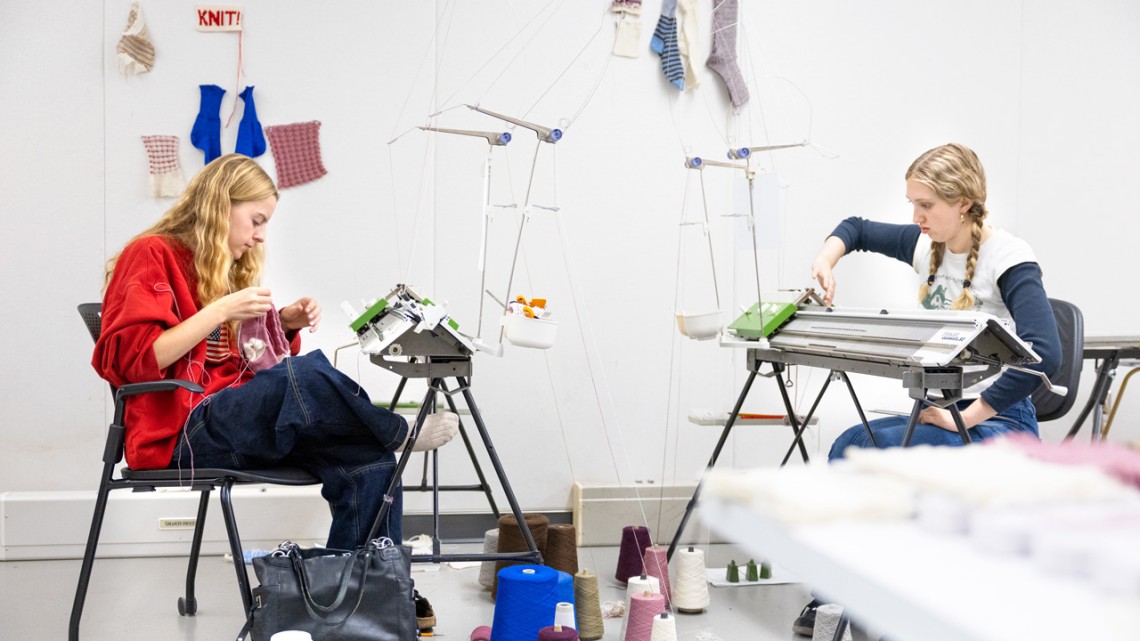
Lourie is one of 9 budding fashion designers in Knitwear Design and Other Applications, a College of Human Ecology class where students are working with New York sheep farmers and wool processors to explore ways to grow the local industry.
New York weather makes sheep farming hard. Feeding hay through the winter means bits of vegetative matter get stuck in the wool. Fine-wool breeds like Merino and Rambouillet do better in drier climates. New York fiber farms tend to be small, producing enough wool for a boutique industry aimed at crafters, and meat-focused sheep farms raise breeds that produce wool that is too coarse for industrial knitting machines. But through a series of visits to regional farms and experimentation with local wool, students in the class are discovering its idiosyncrasies and charms.
“Understanding the whole process of how that material got to a finished product adds a level of intimacy with the yarn that I think helps in the design process,” said Melissa Conroy, senior lecturer of human centered design in CHE and the instructor of Knitwear Design.
Conroy and doctoral student Paige Tomfohrde received a $10,000 grant from the New York Fashion Innovation Center to work with fiber producers to develop yarn suitable for industrial knitting machines. The students are helping test the yarn and providing feedback.