

Every day, the Clothing Closet run by the Catholic Charities of Tompkins/Tioga offers families warm coats and clean shirts — as well as dignity and relief. A vital resource in the Ithaca community, the nonprofit hands out tens of thousands of free clothing, household and personal care items each year.
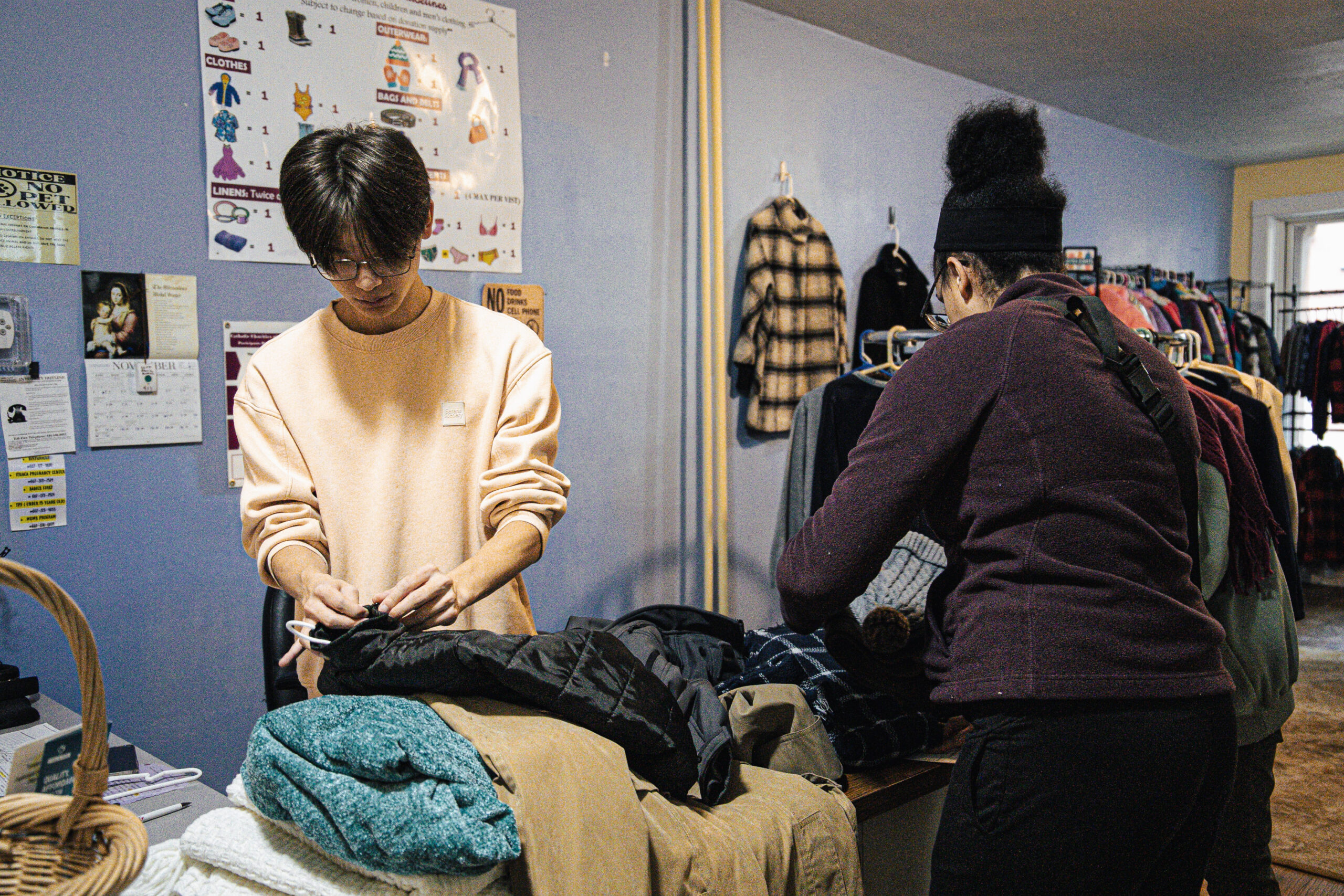
Amid the steady flow of donations and visitors, Rachel Cannata ’25 became a familiar face at the Clothing Closet for three years as she supported the organization’s staff through the Community Work-Study Program (CWSP). During her shifts, the hospitality management major sorted through donations, hung up clothes, trained new volunteers and assisted clients.
That work helped Cannata hone her skills in decision-making, communication and empathy — especially in emotionally sensitive situations. “Sometimes people would come in and say, ‘My house got robbed,’ or ‘My house burned down,’ and you had to decide whether to give them more than their monthly allotment,” she said.
Her attentiveness didn’t go unnoticed. Staff at Catholic Charities said that student workers like Cannata — who, together, directly assist over 100 individuals and indirectly help more than 2,000 community members each year — bring not only much-needed support but also a fresh perspective to daily operations, spotting small inefficiencies and suggesting improvements that long-time staff may have overlooked. “We’re so used to the daily workflow that our students noticed things we no longer saw,” said Michaela Cortright, Deputy Director at Catholic Charities Tompkins Tioga. one supervisor.
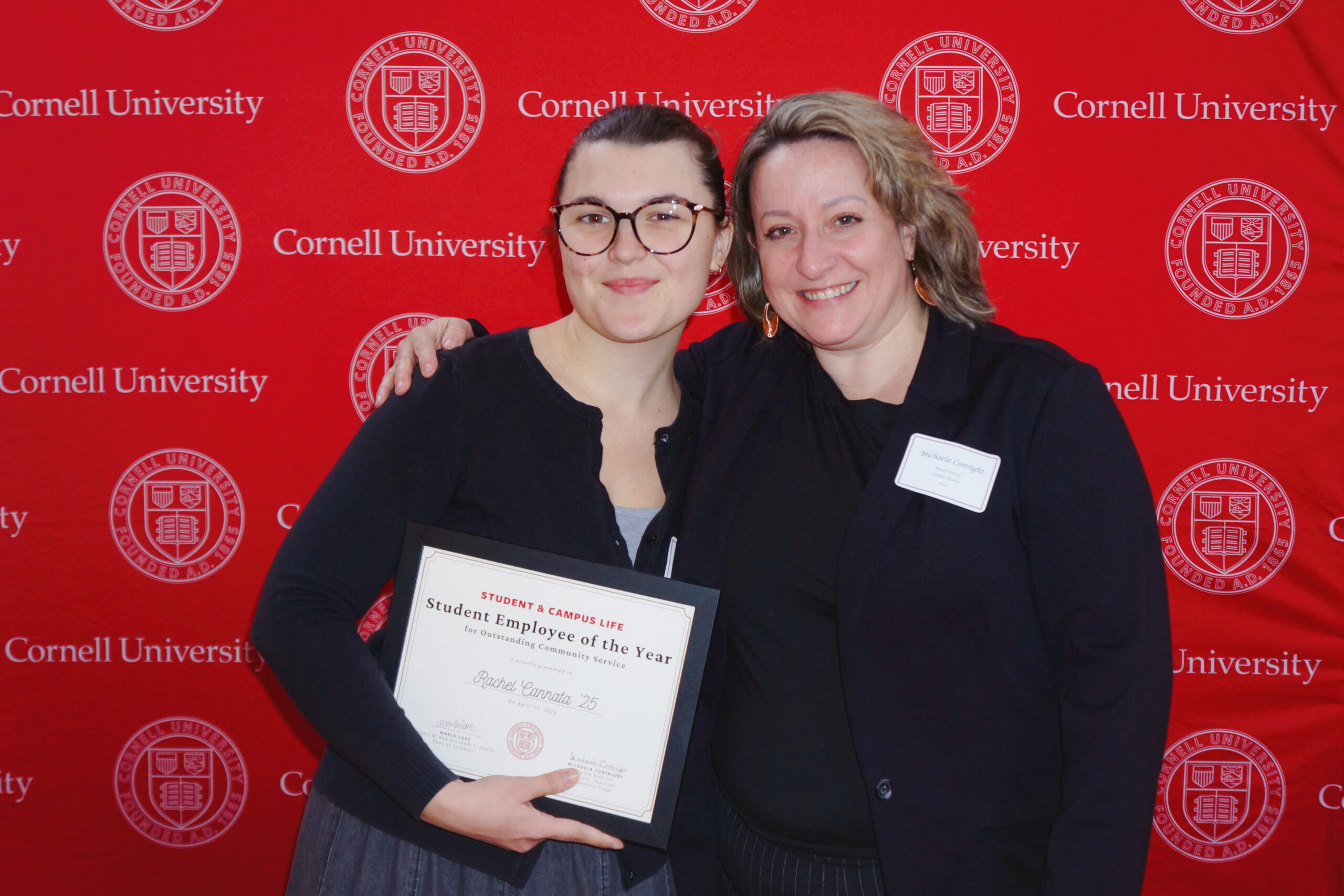
Cannata, a graduate of the Cornell Peter and Stephanie Nolan School of Hotel Administration, received praised for creating a welcoming, dignified environment and connecting easily with individuals from diverse backgrounds — qualities that make services more inclusive and accessible. That care and commitment earned Cannata recognition as the 2025 Student Employee of the Year in the Community Service category, awarded by Student and Campus Life.
Along with practical skills and recognition, Cannata also gained perspective. She praised the staff at Catholic Charities for being approachable and supportive, and she learned from retired volunteers who offered informal training and guidance. The work, she said, brightened people’s days while meeting essential needs, reinforcing her desire to pursue mission-driven work and stay connected with community service.
“I think sometimes people feel that if they don’t have some kind of extraordinary idea for how to innovate community service, they maybe won’t make the effort to just help where they can,” Cannata said. “This experience has taught me that you just have to seek out opportunities to get to know your community and help it where you can.”
This story is part of a series highlighting Cornell’s Community-Work Study Program.